
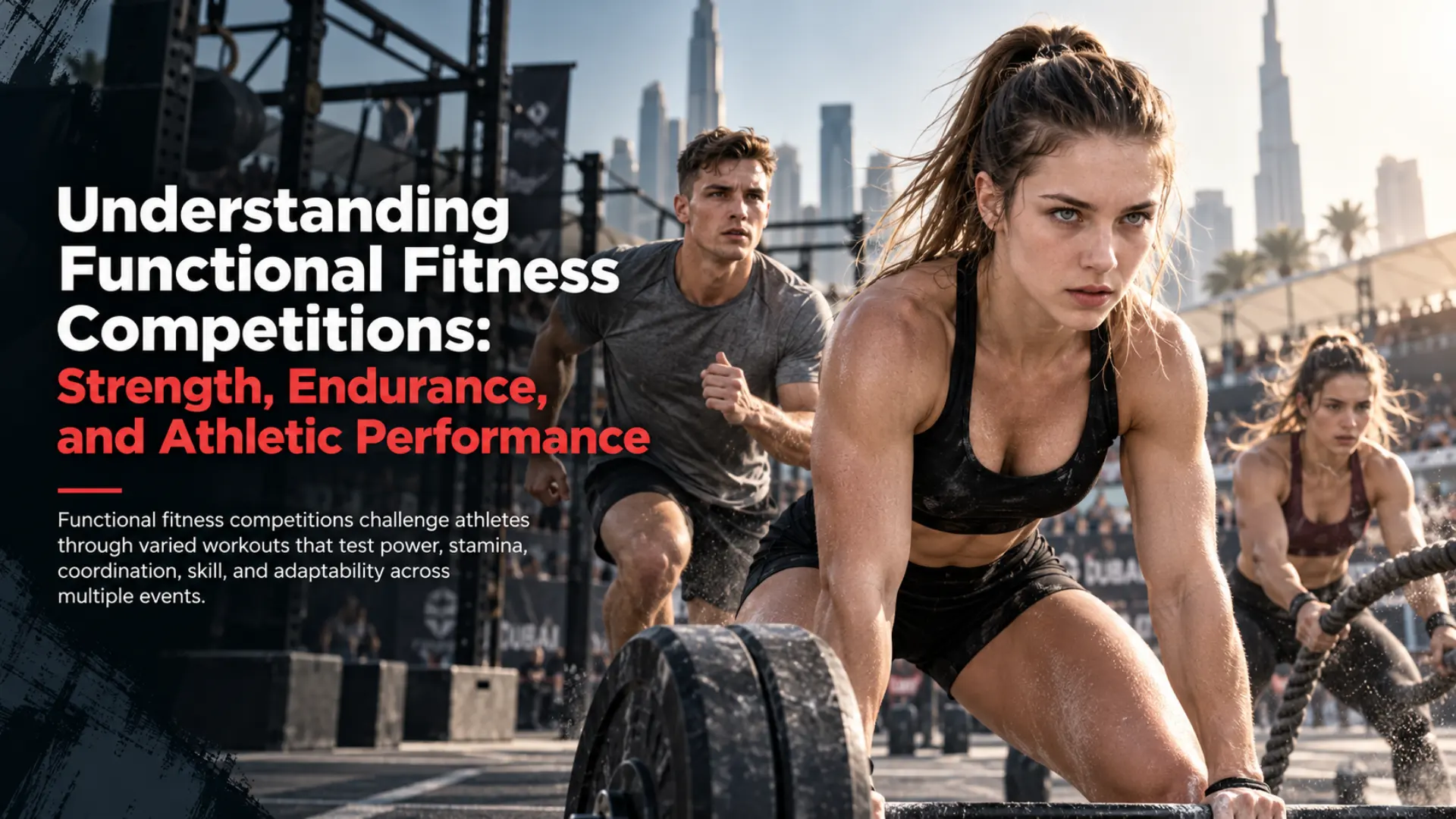
Functional fitness competitions bring together several physical abilities within a single sporting format. Unlike events that measure only running speed, maximum lifting strength, or performance in one specialized discipline, functional fitness competitions generally assess a wider range of movements and physical capacities. Athletes may encounter exercises involving barbells, bodyweight movements, cardiovascular equipment, running, and other demanding activities. The specific combination of exercises depends on the competition’s programming, equipment, available facilities, and established rules. Because events can differ substantially in duration and movement requirements, successful performance often depends on both physical preparation and the ability to adapt to unfamiliar challenges. Understanding these characteristics provides a useful introduction to how functional fitness competitions operate and what they measure.
The competitive side of functional fitness has developed alongside growing interest in structured strength and conditioning programs. CrossFit is one prominent example of a training methodology built around constantly varied functional movements performed at an intensity appropriate to the individual. Its competitive formats commonly measure performance using completion time, repetitions, successfully lifted weight, or event rankings. These measurements allow organizers to compare athletes under defined conditions, although specific scoring systems can vary between competitions. Competition is different from general fitness training because athletes must perform according to prescribed standards while managing fatigue and competitive pressure. Examining the relationship between movement quality, endurance, strength, and preparation helps explain why functional fitness is considered a multidimensional athletic discipline.
Why Functional Fitness Requires Different Physical Abilities
Functional fitness emphasizes physical capabilities that contribute to performance across a variety of activities. These typically include cardiovascular endurance, muscular stamina, strength, flexibility, power, speed, coordination, agility, balance, and accuracy. The ten capacities are commonly used within CrossFit’s description of general physical fitness, although different sporting organizations may categorize physical abilities differently. In competition, several capacities can be tested during the same workout rather than through separate assessments. For example, combining a loaded carry with bodyweight exercises and machine-based conditioning requires athletes to produce force, sustain effort, and coordinate movement while fatigued. The ability to perform across these demands makes preparation more complex than training exclusively for a single physical quality.
Different movement patterns also place different demands on the body. Squatting involves substantial lower-body effort, while pulling movements recruit muscles of the back and arms alongside other stabilizing muscles. Running and rowing involve sustained cardiovascular work, although their mechanical demands and movement techniques differ. Olympic-style weightlifting requires force production as well as timing, mobility, and technical coordination. Gymnastics-based exercises introduce additional demands involving body control and relative strength. A well-designed training program recognizes these differences and develops the necessary abilities through progressive practice rather than treating every exercise as interchangeable.
Strength and Power in Competitive Workouts
Strength plays an important role in functional fitness because many workouts involve moving external loads or controlling bodyweight. Common strength exercises include squats, deadlifts, presses, cleans, and snatches, although the exact movements used depend on the competition. Maximum strength is generally evaluated through the greatest load an athlete can successfully lift according to a prescribed standard. Muscular endurance, by contrast, involves the ability to perform repeated contractions or movements over time. An athlete may possess considerable maximum strength but still struggle when required to complete many repetitions with limited recovery. This distinction explains why competitions often include both heavy lifting events and workouts involving repeated movement under fatigue.
Power introduces another dimension because it concerns the ability to produce force rapidly. Movements such as jumping and Olympic-style lifts depend on the coordinated development of force and movement speed. Improving these qualities generally requires a combination of technical practice, appropriately selected resistance exercises, and progressive training. Increased load is not automatically beneficial when it causes a breakdown in movement quality or exceeds an athlete’s current ability. Training should therefore account for the relationship between strength, technique, and the demands of the intended movement. Competitors who develop these qualities systematically are better prepared to handle different loading conditions without relying solely on maximum lifting ability.
Endurance, Pacing, and Energy Management
Endurance is another essential component of functional fitness competition, particularly when workouts continue for several minutes or include repeated aerobic efforts. Running, rowing, cycling, and swimming are examples of activities that can challenge the cardiovascular and respiratory systems. The relative contribution of aerobic and anaerobic energy pathways changes according to exercise duration, intensity, and recovery periods. Short, demanding workouts can place considerable emphasis on high-intensity energy production, while longer events require sustained energy delivery and careful pacing. Athletes must therefore understand how quickly they can perform without producing fatigue that substantially reduces their ability to continue. Effective pacing is especially important when a workout includes several exercises with different muscular and cardiovascular demands.
Training for endurance involves more than repeatedly completing workouts at maximum intensity. Aerobic conditioning, interval training, and controlled efforts at different speeds can contribute to the development of endurance-related abilities. The World Health Organization recommends that adults aged 18 to 64 perform 150 to 300 minutes of moderate-intensity aerobic activity each week, or 75 to 150 minutes of vigorous-intensity activity, or an equivalent combination. These recommendations describe general health-related physical activity and should not be confused with the training volume required for elite athletic competition. Competitive athletes often organize conditioning according to their events, experience, recovery capacity, and longer-term objectives. The central principle is to develop the ability to sustain appropriate effort while maintaining efficient movement throughout a workout.
The Importance of Movement Standards and Fair Judging
Competitive functional fitness relies on movement standards to establish consistent expectations for athletes. A movement standard describes the requirements that must be satisfied for a repetition to be counted as valid. Depending on the exercise, these requirements may involve starting and finishing positions, an established range of motion, equipment specifications, or particular movement sequences. Judges use the published standards to evaluate whether an athlete has completed the required work. A repetition that fails to meet the standard may not count toward the athlete’s score, even if substantial physical effort was involved. This makes technical accuracy an important competitive consideration rather than merely a training preference.
Judging systems are also necessary for comparing performances across different heats and competitors. When athletes complete the same workout under the same prescribed rules, organizers can rank performances using measurable results such as time, load, or valid repetitions. However, fair comparison depends on consistent judging, clear instructions, and appropriate equipment management. Athletes benefit from becoming familiar with movement standards before attempting a workout under competitive conditions. Practicing correct technique during training can help reduce invalid repetitions and improve movement efficiency. In this way, judging standards support both competitive consistency and a clearer understanding of what each workout is intended to measure.
How Athletes Prepare for Varied Competitive Challenges
Preparing for functional fitness competitions requires an organized approach because the potential range of exercises is extensive. Athletes commonly train strength, cardiovascular conditioning, gymnastics skills, mobility, and movement technique within the same overall program. The precise balance depends on the athlete’s experience, competition level, strengths, and limitations. Training plans may also vary across the year, with some periods emphasizing skill development and others concentrating on event-specific preparation. Attempting to improve every physical capacity at maximum intensity simultaneously can make fatigue management difficult. Structured training allows athletes to distribute workloads and practice important movements while maintaining opportunities for recovery.
Progressive overload is one of the established principles used in resistance training and physical conditioning. It involves gradually increasing an appropriate training demand as an individual adapts, rather than making sudden increases in weight, volume, or intensity. The progression may involve heavier loads, additional repetitions, greater training frequency, improved movement complexity, or changes in workout duration. However, progression should be based on performance, technical competence, and individual recovery rather than a fixed expectation that every session must become harder. Athletes also benefit from assessing progress through measurable indicators, including lifting performance, workout times, and movement consistency. These observations can help identify whether training is producing useful adaptations or whether modifications are needed.
Recovery, Safety, and Sustainable Athletic Development
Recovery is an essential part of physical training because adaptations occur through the interaction between exercise stress and the body’s response to that stress. Insufficient recovery can contribute to persistent fatigue, declining performance, and difficulty maintaining training quality. Sleep, adequate nutrition, hydration, and appropriate scheduling are important considerations for people participating in demanding exercise programs. Recovery requirements differ according to individual factors such as training history, workload, age, and general health. Athletes also need to recognize that soreness and temporary fatigue do not always indicate productive training. A sustainable program balances challenging exercise with sufficient opportunities to regain physical readiness.
Exercise safety depends on selecting activities and workloads that match an individual’s abilities and current condition. Beginners may need to develop basic movement patterns before progressing to more complex or heavily loaded exercises. Appropriate coaching can assist with learning technique, adjusting exercises, and recognizing situations in which a movement should be modified. The World Health Organization advises people who are insufficiently active to begin with manageable amounts of physical activity and gradually increase frequency, intensity, and duration. This principle is relevant to functional fitness because many movements can be adjusted through changes in load, range of motion, repetitions, or complexity. People with relevant medical conditions, injuries, or concerning symptoms may also need professional guidance before undertaking strenuous exercise.
How Functional Fitness Supports Broader Physical Activity Goals
Although competitive functional fitness emphasizes measurable athletic performance, many of its underlying exercises are also used in general physical conditioning. Squatting, lifting, pushing, pulling, carrying, and locomotion are movement patterns that appear in exercise programs and everyday activities. Strengthening the muscles involved in these movements can contribute to physical function and the ability to perform demanding tasks. Regular physical activity is also associated with important health benefits, including improved cardiovascular health, physical function, and mental well-being. These benefits are not exclusive to CrossFit or competitive functional fitness and can be achieved through many appropriately designed forms of exercise. The relevance of functional fitness lies partly in its combination of strength training, endurance activities, and movement practice within a broader conditioning approach.
The distinction between competitive performance and general health remains important when evaluating exercise programs. A competition may require athletes to complete demanding workouts at prescribed loads or movement standards, while recreational participants can modify exercises according to their current abilities. For general health, the World Health Organization recommends muscle-strengthening activities involving all major muscle groups on at least two days each week in addition to regular aerobic activity. These recommendations provide a useful foundation for understanding the importance of combining different forms of exercise. Individuals do not need to compete or perform advanced movements to benefit from improved muscular strength and cardiovascular fitness. Appropriate exercise selection, consistency, and progressive development are more relevant to most participants than achieving elite competitive standards.
The Continuing Development of Functional Fitness as a Sport
Functional fitness competition illustrates how multiple athletic disciplines can be combined into structured sporting events. Its formats can include individual and team categories, prescribed movement standards, timed workouts, and scoring systems based on several separate performances. These elements create opportunities to assess both specialized physical qualities and the broader ability to complete varied athletic tasks. Different competitions may emphasize endurance, lifting ability, gymnastics skills, or mixed conditioning to different degrees. Consequently, results from one event do not necessarily predict performance in every other competitive format. Understanding the specific rules and tests remains essential when comparing athletes or interpreting championship results.
The broader development of the sport also demonstrates the relationship between training methodology and organized competition. Recreational functional fitness programs generally focus on improving physical capacity and exercise participation, while competitions introduce formal rankings and standardized performance requirements. Both contexts use many of the same exercises, but their objectives and appropriate levels of intensity can differ considerably. For athletes, effective preparation involves physical conditioning, technical competence, pacing, and recovery management. For general participants, the same movement categories can provide a foundation for maintaining strength, endurance, and functional ability when adapted appropriately. Ultimately, functional fitness is best understood as a broad approach to physical performance whose principles can be applied differently in competitive sport and everyday exercise.